
Food-Grade Ingredients: Understanding Purity, Quality & Compliance


- 2026-10-22
- Keya Chem Corporation
Why purity, consistent quality, documentation, and compliance matter when selecting ingredients for food formulations
When an ingredient becomes part of a food product, its role goes beyond delivering a particular function. Purity, consistency, quality, and suitability for the intended application are equally important.
For food manufacturers, selecting an ingredient is not simply about finding a product with the right name or specification. It is about understanding the ingredient, evaluating its quality, reviewing the relevant documentation, and confirming its suitability for the intended application and target market.
Quick Answer
What Are Food-Grade Ingredients?
A food-grade ingredient is generally an ingredient that is suitable for use in food applications and meets the relevant quality and safety requirements for its intended use.
However, food grade does not mean that every ingredient is interchangeable.
Different food ingredients can have different:
- Specifications
- Purity levels
- Functional characteristics
- Quality parameters
- Permitted applications
- Documentation requirements
The appropriate ingredient depends on the product, process, formulation requirements, intended use, and target market.
What Does “Food Grade” Mean?
Food grade generally refers to an ingredient that is suitable for use in food applications and meets the relevant quality and safety requirements for its intended use.
Being food grade does not automatically mean that an ingredient is suitable for every food application.
Manufacturers should consider the specific requirements of the formulation, including:
- Intended application
- Required specification
- Purity and quality parameters
- Processing conditions
- Applicable regulatory requirements
- Customer requirements
- Target market
Therefore, food manufacturers should evaluate an ingredient beyond its name or basic specification.
Why Does Purity Matter in Food Ingredients?
Purity can influence how an ingredient behaves within a food formulation.
Variations in composition or the presence of unwanted impurities may affect characteristics such as:
- Texture
- Viscosity
- Stability
- Appearance
- Taste and odour
- Processing performance
- Batch-to-batch consistency
This becomes particularly important when food products are manufactured at scale.
A formulation that performs well in one production batch needs to perform reliably across subsequent batches.
Therefore, understanding ingredient purity is an important part of maintaining predictable formulation performance.
What Is Food Ingredient Quality?
Food ingredient quality is not determined by a single specification.
It can involve:
Specification + Testing + Documentation + Packaging + Storage + Supply Consistency
A clear and well-defined specification provides the foundation for evaluating an ingredient.
Consistent testing, appropriate documentation, suitable packaging and storage, and reliable supply can provide additional confidence in the material being purchased.
For manufacturers, consistent ingredient quality can help formulation and production teams work with greater confidence and reduce unnecessary adjustments during manufacturing.
Why Is Batch-to-Batch Consistency Important?
Batch-to-batch consistency means that an ingredient performs predictably from one supply batch to another when used under comparable formulation and processing conditions.
Variations in an ingredient can potentially affect the finished product.
Manufacturers may need consistent performance in areas such as:
- Viscosity
- Texture
- Appearance
- Stability
- Processing behaviour
- Overall product consistency
For large-scale food production, predictable ingredient performance can make formulation and manufacturing more manageable.

What Factors Should You Consider When Selecting a Food-Grade Ingredient?
Choosing a food-grade ingredient should involve more than checking whether it is suitable for food use.
- Intended Function
What role should the ingredient perform in the formulation?
Depending on the ingredient, this may involve thickening, stabilization, texture modification, moisture management, or another specific function.
- Specification
The ingredient should meet the required specification for the intended application.
- Purity and Quality
The ingredient should meet the relevant quality parameters required for the formulation and target market.
- Processing Conditions
Consider how the ingredient will be handled during mixing, heating, cooling, processing, and storage.
- Documentation
The supplier should be able to provide appropriate documentation for evaluating and managing the ingredient.
- Regulatory Requirements
The ingredient should be evaluated within the applicable requirements of the intended food application and target market.
- Supply Consistency
Reliable and consistent supply is important when an ingredient is part of an ongoing production process.
What Is Food Ingredient Compliance?
Food ingredient compliance refers to meeting the applicable requirements for an ingredient based on its intended use and target market.
Requirements can vary according to:
- Country or market
- Food application
- Ingredient
- Intended use
- Applicable regulations
- Customer requirements
Depending on the ingredient and destination market, manufacturers may need to consider:
- Applicable food regulations
- Permitted uses
- Ingredient specifications
- Labelling requirements
- Supporting documentation
- Customer-specific requirements
Compliance should therefore be considered during ingredient selection rather than only after a formulation has been developed.
Important: Exact regulatory requirements should always be evaluated according to the specific ingredient, application, and target market.
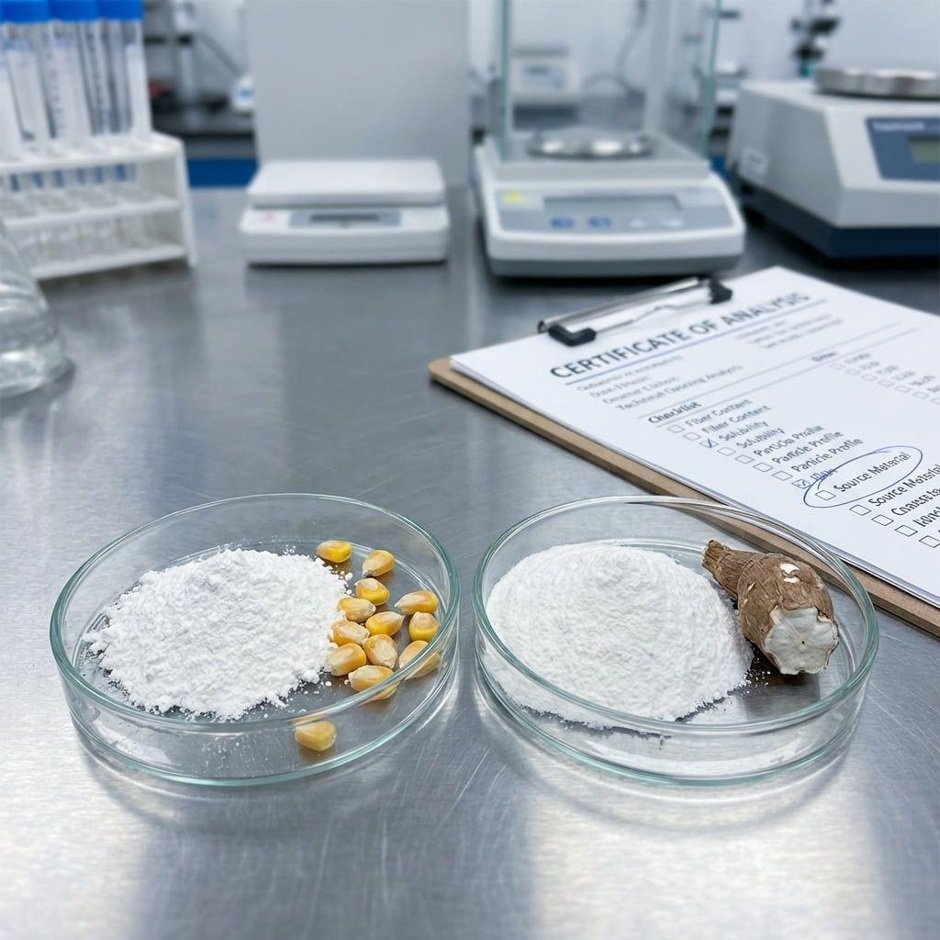
What Documents Should a Food Ingredient Supplier Provide?
The required documentation depends on the ingredient, application, market, and customer requirements.
Depending on the supply arrangement, relevant documents may include:
Document | Purpose |
Certificate of Analysis (CoA) | Provides analytical results for the relevant batch |
Product Specification | Defines important quality and technical parameters |
Safety Data Sheet (SDS) | Provides safety and handling information where applicable |
Technical Data | Provides relevant technical or functional information |
Regulatory / Compliance Documentation | Supports evaluation against applicable requirements |
Allergen Information | Provides relevant allergen-related information where applicable |
Origin Information | Helps establish ingredient source and traceability |
The exact documentation package should be determined according to the ingredient, application, destination market, and customer requirements.
Why Does Traceability Matter for Food Ingredients?
Traceability helps manufacturers understand where an ingredient comes from and provides a basis for tracking the material through the supply chain.
Information related to:
Origin → Batch Identification → Documentation → Packaging → Supply Records
can support a more transparent ingredient supply process.
For manufacturers, traceability can also be valuable when maintaining internal quality systems and evaluating ingredient suppliers.
Quality Starts Before the Ingredient Reaches Production
A food manufacturer’s quality system does not begin at the production line.
It begins with ingredient selection and supplier evaluation.
A suitable supply partner should understand that customers are not simply purchasing a material. They are depending on that material to perform consistently within their own manufacturing process.
This is where:
Quality Assurance + Technical Understanding + Documentation + Supply Consistency
become important.
A supplier that understands application and quality requirements can provide more value than one that simply supplies a product against a basic specification.
Food Grade vs High Purity: Are They the Same?
No. Food grade and high purity should not automatically be treated as the same thing.
Food grade refers broadly to suitability for food applications and compliance with relevant requirements for the intended use.
Purity describes the composition and relevant quality characteristics of a particular material.
An ingredient can therefore have a defined purity specification while also being evaluated for suitability for a particular food application.
The appropriate specification depends on the:
- Ingredient
- Application
- Processing requirements
- Target market
Why Does Consistent Quality Matter in Food Manufacturing?
For food manufacturers, ingredient quality contributes to the reliability of the finished product.
When ingredients are consistent and properly documented, manufacturers can have a clearer basis for:
- Formulation control
- Production planning
- Quality evaluation
- Batch comparison
- Supplier management
- Finished-product consistency
Ingredient quality should therefore be viewed as part of the overall manufacturing process rather than as an isolated purchasing consideration.
How Do You Choose the Right Food-Grade Ingredient?
There is rarely one specification that is ideal for every food formulation.
A practical approach is:
Application → Function → Specification → Processing → Compliance → Supply
Before selecting an ingredient, manufacturers should ask:
- What function does the ingredient need to perform?
- What specification is required?
- What purity and quality parameters are important?
- What processing conditions will it experience?
- What documentation is required?
- What regulatory requirements apply to the intended market?
- Can the supplier provide consistent quality and supply?
This approach helps manufacturers make ingredient decisions based on application requirements rather than product names alone.
What Should You Look for in a Food Ingredient Supplier?
A reliable food ingredient supplier should be able to support customers with more than product availability.
Consistent Quality
The ingredient should consistently meet the agreed specifications.
Appropriate Documentation
Relevant technical and quality documentation should be available according to the ingredient and application.
Technical Understanding
The supplier should understand the functional and application requirements of the ingredient.
Transparent Supply
Clear information about specifications, packaging, origin, and supply should be available where applicable.
Application Focus
The supplier should understand that the same ingredient may have different requirements depending on its intended use.
Purity, Quality and Compliance Work Together
Purity, quality, and compliance are closely connected but represent different aspects of ingredient selection.
Purity
Purity concerns the composition and relevant quality characteristics of the ingredient.
Quality
Quality concerns whether the ingredient consistently meets the required specification and performs as expected.
Compliance
Compliance concerns whether the ingredient meets the applicable requirements for its intended use and target market.
Together, they provide a stronger foundation for responsible food ingredient selection.
Purity → Quality → Compliance → Consistent Formulation Performance
Frequently Asked Questions About Food Ingredient Functionality
What Makes an Ingredient Food Grade?
A food-grade ingredient is generally one that is suitable for use in food applications and meets the relevant quality and safety requirements for its intended use. Exact requirements depend on the ingredient, application, and target market.
Why Is Purity Important in Food Ingredients?
Purity can influence ingredient performance and may affect properties such as texture, viscosity, stability, appearance, taste, odour, and processing performance.
Does Food Grade Mean High Purity?
No. Food grade and purity describe different aspects of an ingredient. Food grade relates to suitability for food use, while purity describes the composition and relevant quality characteristics of the material.
What Documents Are Important When Purchasing Food Ingredients?
Depending on the ingredient and requirements, documents may include a Certificate of Analysis (CoA), product specification, SDS where applicable, technical data, regulatory or compliance documentation, allergen information, and origin or traceability information.
Why Is Batch-to-Batch Consistency Important?
Consistent ingredient performance helps manufacturers maintain predictable formulation and production results and can reduce unnecessary adjustments between production batches.
Why Does Regulatory Compliance Matter for Food Ingredients?
Food ingredients need to be evaluated according to the applicable requirements of the intended food application and target market. Requirements can vary by country, ingredient, and use.
How Do You Choose the Right Food-Grade Ingredient?
Start with the intended application and required function. Then evaluate the ingredient’s specification, purity, processing requirements, documentation, applicable regulatory requirements, and supply consistency.
What Should I Ask a Food Ingredient Supplier?
Useful questions include:
- What is the product specification?
- What quality parameters are tested?
- Can you provide a Certificate of Analysis?
- What technical documentation is available?
- What regulatory or compliance information is available?
- What is the ingredient’s origin?
- How is batch consistency maintained?
- What packaging and storage conditions apply?
Quality You Can Build On
In food manufacturing, quality is not just about meeting a specification on paper.
It is about purity, consistency, documentation, compliance, and confidence in every batch.
At Keya Chem, our focus is on supplying food-ingredient solutions with the quality and technical understanding required by modern food manufacturers.
Because when an ingredient becomes part of your product, its quality becomes part of your reputation.
Looking for the right food-grade ingredient for your formulation?
Talk to our team about your application requirements.

Worldwide Shipping
Door Step Delivery with care

Quality Products
Feel the Premium

Our Office Timing
Monday to Saturday : 9.30 AM to 5.30 PM | Sunday : Closed

Genuine Products
100% Satisfaction Guarantee
CALL US ON
MAIL US ON
VISIT US ON
- Plot No. 86/4, Near Kishan Brother Weigh-Bridge, Phase I, Vatva GIDC, Ahmedabad, Gujarat - 382445